Butz Bartolome
Butz Bartolome
Gasolina, Presyo, Negosyo: What the Oil Crisis Means To You
armando bartolome | March 14, 2026
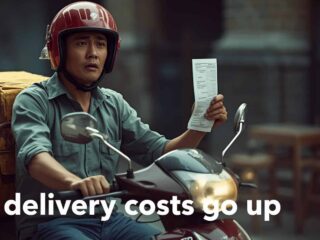
You're running your negosyo — sourcing goods, managing your team, keeping customers happy — and then you check the news and see that oil prices just spiked 25% because of a war happening thousands of kilometers away. Sounds far away, right? But here's the truth: when the price of oil moves, everything moves with it. Your delivery costs. Your supplier's prices. The budget your customers have left to spend on what you're selling. Whether you're selling luggage in Divisoria or longganisa in the province, you are not insulated from what's happening in the Middle East right now. And as your Business Mentor, it's my job to help you understand what's going on — and more importantly, what you can do about it. The current oil crisis is rooted in the conflict involving the U.S., Israel, and Iran. The Strait of Hormuz — a narrow waterway in the Persian Gulf — is under threat. Now here's why that matters to you: roughly 20% of the world's oil supply passes through that strait. When that route gets disrupted, global oil supplies tighten, and prices shoot up. In just a short period, global oil prices surged by more than 25%. Major financial institutions are warning that prices could climb past $100 per barrel if the disruption continues. The Philippines is an oil-importing country. We produce very little of our own oil, which means we feel every price spike directly — at the pump, in the grocery, on our delivery receipts. Let me be direct with you. Here's what's likely already happening or about to happen to your business: Here's where I want to shift the conversation. A crisis is not the time to panic — it's the time to think clearly while others are panicking. Here's what I recommend: Many small business owners wait until they're already losing money to adjust prices. Don't do that. Look at your cost structure today. If your input costs have gone up, your pricing needs to reflect that — otherwise you're working harder for less. If your products rely on imported goods, this crisis is a wake-up call to explore local alternatives. Local sourcing reduces your exposure to global supply chain disruptions and can actually be a selling point — "proudly Philippine-made" resonates with customers right now. Consolidate your deliveries. Batch orders when possible. Talk to your courier partners — some offer volume discounts or flat-rate arrangements that are worth revisiting. Every peso saved on logistics goes back to your bottom line. When consumers tighten budgets, they keep spending on two things: things they need, and things that give them clear value for money. Ask yourself — how does your product or service fit into that picture? If it doesn't right now, can you repackage or reframe it? I've been mentoring Filipino entrepreneurs for a long time. And one thing I've seen over and over is this: every economic crisis in our country's history produced a new wave of resilient, resourceful entrepreneurs. When things were hard, the weak businesses folded — but the smart ones adapted. They found new suppliers, adjusted their offers, stayed close to their customers, and came out stronger on the other side. The businesses that survive a crisis are the ones that don't wait to be hit — they anticipate, adjust, and act first. You don't need to have all the answers. But you do need to start asking the right questions about your business today. This isn't a reason to be afraid. This is your moment to show what kind of entrepreneur you really are. About the Author Armando "Butz" Bartolome is known as The Business Mentor, inspiring individuals and organizations to develop an entrepreneurial mindset. He has assisted countless micro-entrepreneurs who are now known brands across the Philippines. Contact him at aob@gmb.ph or visit butzbartolome.com. Gasolina, Presyo, Negosyo: What the Oil Crisis Means To You

What's Actually Happening?
How It Hits Your Negosyo
What Smart Entrepreneurs Do During a Crisis
The Butz Take: Crisis Is Where Entrepreneurs Are Made